
Tension-based headaches and acute migraines pose a significant challenge to manage and can be awfully fatiguing. The FDA-approved prescription combination medication of Fioricet serves as an off-label medication when other safer drugs are not effective. It’s more functional than average pain relievers, delivering fast-tracked relief from migraines and stress-centric headaches. Available in three active drug compositions of butalbital, acetaminophen, and caffeine, it is typically considered a hidden risk drug. Containing a Fioricet Controlled Substance, butalbital, barbiturate has high dependence, abuse, and addictive properties. The second addictive component is acetaminophen. It triggers liver issues.
What Is Fioricet And What Is It Used For?
The prescription analogue of Fioricet contains three active ingredients: Butalbital, Acetaminophen, and Caffeine. The prescription combination typically works to relieve tension headaches, while in particular cases; it might be used to treat migraines as well. The three combination ingredients function separately on the various aspects of pain. Fioricet typically starts functioning within 30-60 minutes after being taken orally. Nonetheless, its peak effect primarily starts only in 1 to 2 hours. The constituents of butalbital offer muscle relaxation, triggered by tension-centric headaches. Acetaminophen acts as an opiate because it relieves headaches and related fever. In addition, Caffeine acts as a sole energizer; it increases blood flow in addition to facilitating the functionality of the other two drugs. The main contrasts for Fioricet compared to other migraine treatments like NSAIDs and triptans consist of the possibilities for addiction or abuse combined with drowsiness.
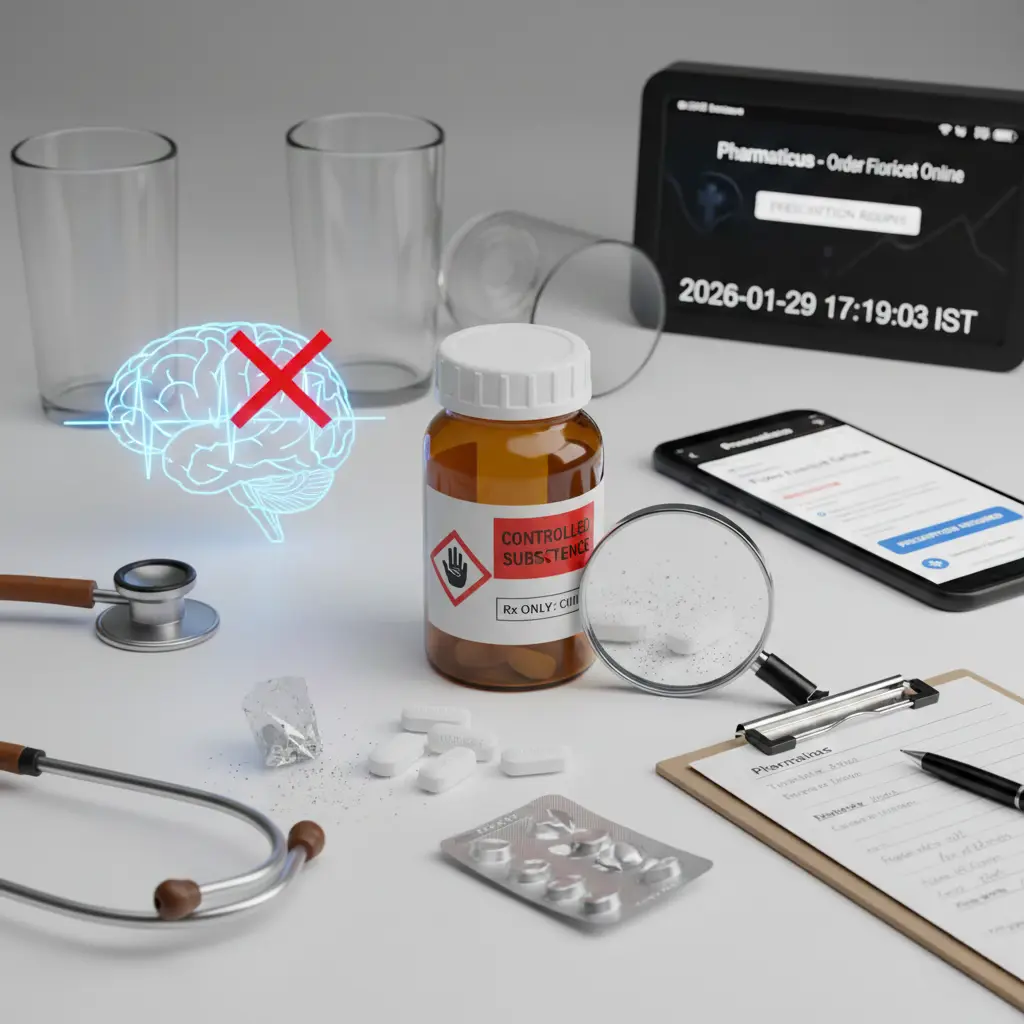
What About Fioricet Controlled Substance?
Even though it is a prescription-only medication, Fioricet Controlled Substance is typically not federally classified in the USA. Thus, it is usually considered a controlled or addictive drug in many states in the USA. It is legally treated, owing to its potential dependency and misuse of its butalbital, barbiturate ingredient. Fioricet, being exempted as a prescription medication in 2026, is categorized as an exempted prescription medication based on the mixed ratio of butalbital to acetaminophen ingredients. Those countries that do not recognize it as FDA- exempt classify Fioricet as a controlled substance of Schedule III.
Why Is Fioricet Considered To Be A Regulated Substance?
Owing to its active ingredient of butalbital, a Fioricet controlled substance is considered restricted in many US states and jurisdictions. This barbiturate brings a high potential for physical and mental dependency, addiction, and physical withdrawal. The prescription combination Fioricet medication for stress-based headaches and migraines comes in a regular dose of 1-2 pills or capsules, every four hours. However, the maximum dosage can be only six tablets in total for any average adult in a whole day. Fioricet should be restricted to fewer than three days a month. Thus, overuse can cause severe side effects, including liver failure and other threats, due to withdrawal-based seizures.
How Regulation Protects Patients?
- Restricts Access – as Fioricet is considered a controlled substance in different areas, individuals cannot buy it as an OTC medication.
- Needs Medical Supervision – regulation ensures that a licensed healthcare professional must authorize Fioricet for migraines or for tension headaches. It further permits routine tracking by the patients for possible overuse or addiction.
- Avoids Harmful Combinations – Furthermore, regulates and compels druggists to monitor prescriptions. It minimizes the possibilities of individuals taking Fioricet with other unhealthy substances, such as alcohol.
- Administers Secure Use – Efficient regulation supports individuals never to surpass the safe dosage levels of Fioricet, thus safeguarding patients from severe liver concerns.
Benefits of Fioricet: When It May Be the Right Choice
The prescription combination medication of Fioricet proves to be highly effective in alleviating tension-centric or muscle contraction headaches. It typically mitigates acute pain and other health issues related to headaches. It proves to be worthy, especially when other OTC medications are ineffective. With butalbital-acetaminophen-caffeine, this combination prescription drug is typically used for treating muscle contraction headaches, but only for the short term. Thus, it is a substitute choice when OTC drugs are inefficient in controlling headache-centric pain. It is most effective for patients having severe tension-based headaches, as it is typically used when other over-the-counter medicines have failed. Considered as a highly effective secondary treatment, it delivers short-term relief from complex stress-based headaches.
Risks and Side Effects to Consider Before Taking Fioricet
Some of the possible side effects that may arise from the intake of this prescription drug, Fioricet, may include dizziness, abdominal pain, drowsiness, vomiting, and difficulty in breathing. However, this drug, which is made up of the Fioricet controlled substance, Butalbital, and acetaminophen, also resulted in acute health conditions. Dependency is due to the presence of the drug butalbital and liver problems because of acetaminophen. Such health concerns are potentially enhanced by taking alcohol or other acetaminophen-containing drugs. Fioricet medication overuse can cause rebound headaches with recurrent use over 2 to 3 days per month. Acute skin reactions can happen, typically with overuse or alcohol use. Moreover, alcohol or other depressants trigger impaired coordination, confusion, and a feeling of breathlessness in patients.
Alternatives to Fioricet
As an alternative to the Fioricet controlled substance of butalbital and acetaminophen, many non-controlled prescription medications exist. These non-controlled drugs include NSAIDs, migraine-centric headache meds of triptans, and other OTC medications not containing barbiturates. Other OTC alternatives to Fioricet are several NSAIDs, including Naproxen, or Motrin for general pain, or combo drugs of Excedrin.
These new non-prescription drugs have various aims, including the care of pain and inflammation. However, it is best to consult a licensed healthcare provider first. In this way, the provider’s advice must be well heeded to avoid the possibility of headaches triggered by the overuse of drugs. However, such Fioricet alternative medications are not considered standard care, owing to risks of dependency, sedation, and drug-overuse headaches.
Some modern and safer migraine-based headache alternatives can be preventative remedies, and following a holistic lifestyle management to mitigate the occurrence of tension headaches and allied pain.
Conclusion: Taking a True Informed Decision towards Fioricet
Based on the current DEA protocols and the FDA-approved labeling, the Fioricet controlled substance, butalbital and acetaminophen is an exempt prescription drug. But, it is regarded as a controlled medication in several states in the USA. Regarding the use of this special medicine for acute tension headaches, it is better to seek a personalized consultation with the help of a licensed medical professional. It is owing to Fioricet for migraines and stress-headaches that come with risks of dependency, misuse, drug interactions, and liver damage. Hence, it is typically considered the last resort prescribed remedy for short-term treatment only, when other OTC drugs are ineffective. To order Fioricet online, it is suggested to select trusted pharmacy sites such as Pharmaticus, which provides approved Fioricet medication by the FDA. Even though it is used as an off-label remedy for migraines, it should be purchased under a prescription from an authorized medical professional.
Frequently Asked Questions
1. Can Fioricet become addicting?
Yes, Fioricet can be addictive. It contains butalbital, a sedative that may lead to both physical and psychological dependence when used for prolonged periods or without proper medical supervision.
2. How long does Fioricet remain in the body?
Fioricet contains butalbital, which has an average half-life of about 72 hours. Traces of butalbital may be detected in saliva for approximately 2–3 days, depending on dosage, metabolism, and frequency of use.
3. Can you travel with Fioricet?
Yes, Fioricet can be carried while traveling if you have a valid prescription from a licensed physician. Extra caution is required when traveling internationally, as butalbital is regulated or controlled in some countries.
4. Is Fioricet currently prescribed?
Yes, Fioricet is still prescribed for the treatment of migraines, tension headaches, and acute headaches when over-the-counter medications are not effective.
5. What are the possible results of suddenly stopping Fioricet?
Abruptly stopping Fioricet may cause withdrawal symptoms, including nervousness, rebound headaches, insomnia, anxiety, and other discomforts. Gradual tapering under medical supervision is recommended.


